EBOX-100 (Gen 1) full specifications and the EAR CLOUD platform architecture. Final specs follow the delivered configuration and test reports.
Built on the ESP32-P4 high-performance AI platform, designed for voice-first scenarios.
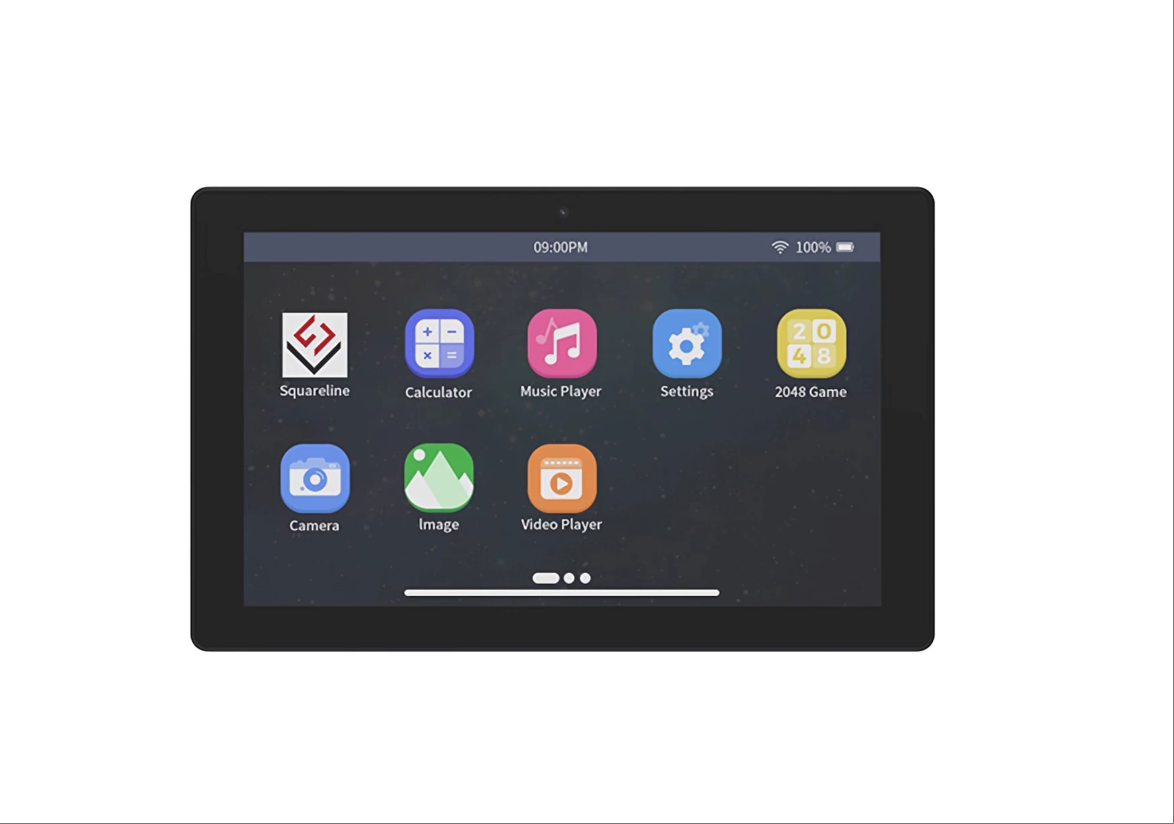
Dual-core RISC-V processor for far-field voice and local response.
1024 × 600 capacitive multi-touch — the visual confirmation layer.
Microphone array with AEC / noise suppression; loud, clear playback.
Reserved for barcode checks and visual confirmation.
| Category | Specification |
|---|---|
| Product model | EBOX-100 Interactive Terminal (Gen 1) |
| Main control | ESP32-P4 dual-core RISC-V, designed for AI voice scenarios |
| Display | 7-inch 1024 × 600 capacitive multi-touch |
| Camera | Built-in 2MP camera |
| Audio | Mic array with AEC and noise suppression; amplified speaker |
| Connectivity | 100Mbps Ethernet (RJ45) · Wi-Fi 6 · Bluetooth 5 |
| Ports | USB-C × 2 · USB-A · TF slot · expansion contacts |
| Power | DC power adapter |
| Mounting | Wall mount (4 holes) / desktop |
| Software updates | OTA, managed centrally by EAR CLOUD |
| In the box | EBOX-100 · power adapter · mounting kit · quick-start guide |
* Final specs follow the delivered configuration and test reports; box contents follow the actual shipment. Contact sales for the full selection list.
Four layers with clear responsibilities — swap models without touching agents, swap systems without touching terminals.
Far-field pickup, AEC, noise suppression, playback and display; secure MQTT over TLS uplink.
ASR, NLU, multi-turn dialogue management and TTS reply assembly.
Per-role, per-scenario agents orchestrating LLMs, enterprise knowledge and dialogue policy.
Standard MCP tool calls plus system API integration — interface lists and acceptance cases in writing.
No system rework, no data migration — just add an ear in the cloud.
| System | Queryable data (current scope examples) |
|---|---|
| WMS | Stock, bins, batches, in/outbound records — integrated today |
| MES | Work orders, steps, progress and reporting queries |
| EMS | Asset ledger, inspection records, repair workflow, runtime status |
| ERP / others | Master data, order & finance views, custom API access |
Standard APIs first · read-only first · scenario by scenario. Write actions are reviewed and authorized item by item.
Interface list (what data, which API) · scenario scripts (how employees ask) · acceptance cases (pass before go-live).
WMS and MES remain the masters of data; EAR CLOUD simply moves their entry point to the employee's voice.
Tell us your systems and scenarios; sales will send the matching technical package.